
Spurge (Euphorbia spp.)
Euphorbia spp.
Horse
Moderate
Get veterinary advice the same day and remove access.
Equio informs, it does not diagnose. When in doubt, call your vet.
What to do now
- Antidote
- No specific antidote. Symptomatic and supportive treatment.
- Time to signs
- A few minutes to one hour.
- Prognosis
- Good for the animal's life, but recovery is painful, and the horse may refuse to eat for several days.
- Rinse the mouth thoroughly with clean water using a gentle stream.
- Rinse eyes with clean water using a gentle stream if contact occurred.
- Contact a veterinarian.
Its ID card
- Height
- 20 cm – 1.5 m
- Flowering
- April to August.
- Toxic parts
- Entire plant (the white latex flows as soon as a stem or leaf is broken).
- Toxin
- Phorbol esters (Irritant Latex)
- Habitat
- Dry meadows, embankments, gardens, wastelands, rockeries.
- Soil indicator
- Tolerates drought very well, stony, poor soils.
- Regions
- Entire Europe
- In hay
- Yes — stays toxic once dried
- Palatability
- Very low. The horse generally spits it out at the first mouthful due to immediate pain.
When the risk rises
April to August (period of abundant sap).
Spotting it in the field
Dandelion (which also has white latex, but spurge lacks yellow, petal-like flowers and has a leafy stem). — smell : odorless or slight acrid smell when crushed.
- Erect stem, often reddish at the base.
- Very distinctive yellow-green flowers shaped like small cups.
- When broken, the plant immediately releases abundant white, sticky latex.
Signs to watch for
Acute toxicity.
Dose : Difficult to determine precisely as horses generally refuse to ingest a lethal quantity. A few tens of grams of pure latex can be very dangerous.
- Severe burns and blisters on lips and tongue
- Very heavy hypersalivation (horse drools profusely)
- Moderate to severe colic if ingested
- Irritative, sometimes bloody diarrhea
- Severe conjunctivitis if sap reaches the eyes
Who is affected
Other species : Irritant to absolutely all mammals (including humans).
In pregnant mares : no direct abortifacient risk documented; primarily linked to stress from pain.
Getting rid of it
Method : Uproot the entire plant, including roots, while wearing gloves and protective eyewear. Dispose of waste safely (incineration recommended).
- Inspect paddocks and grazing areas to identify and remove spurge before it is ingested.
- Maintain dense grass cover to limit the establishment of weeds.
- Educate staff on the risks and plant identification.
Frequently asked questions
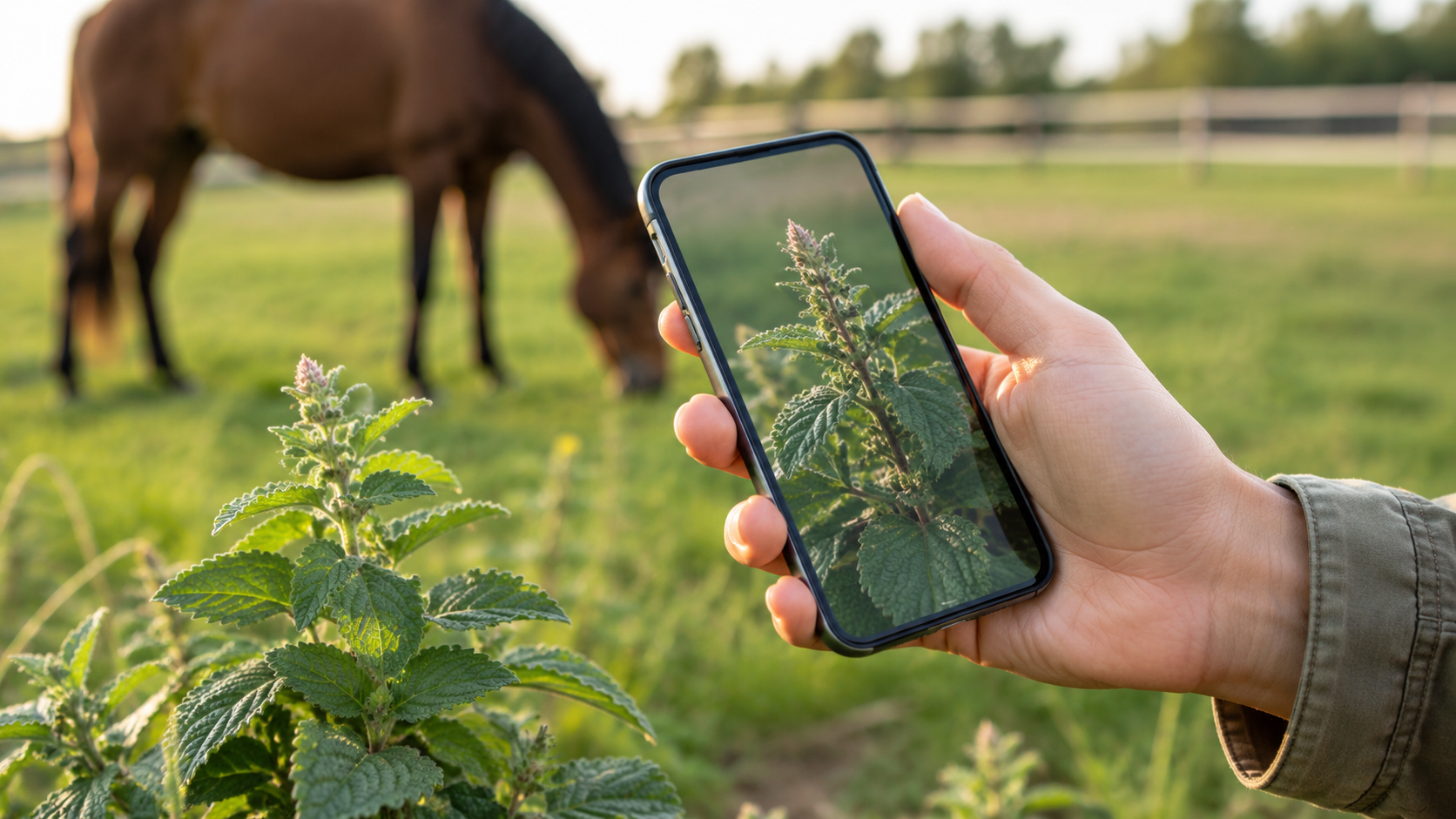
Can Equio identify Spurge (Euphorbia spp.) from a photo?
It can help organize visual clues, but plant identification must remain cautious when horse health is at stake.
Is Spurge (Euphorbia spp.) dangerous in hay?
This entry flags hay vigilance. Isolate suspicious forage and ask for professional advice if exposure is possible.
This page is informational. If ingestion is likely, if signs appear, or if the horse is fragile, contact a veterinarian immediately.